

Professional Editing That Prepares Your Manuscript for Readers
You cannot properly proofread your own book. Familiarity fills in what is missing, which is why errors that authors read past a dozen times are obvious to a reader on page one. Liberty Book Publishings provides book editing services to first-time and independent authors preparing manuscripts for publication, correcting the errors and inconsistencies that cost readers’ trust. Your voice, your story, and your copyright remain entirely yours.
100% Copyright
Ownership
NDA-Protected
Project Support
Author-First
Publishing Guarantees



What Professional Editing Does for a Manuscript Before Publication
Our book editing covers more than fixing typos. A thorough pass checks grammar and punctuation, but also whether sentences say what they were meant to say, whether terminology stays stable, and whether details hold across three hundred pages. Character names drift. Timelines contradict themselves. Hyphenation changes between chapters. None of these are visible to the person who wrote them, because the author already knows the intended version. A reader has only the page, and every inconsistency is a small interruption in their attention.
We begin by reading the manuscript before quoting anything, so the recommendation matches the book rather than a package. Corrections are made with tracked changes, meaning every alteration is visible and can be accepted or declined individually. Anything ambiguous is raised as a question rather than resolved silently, because only the author knows what a sentence was supposed to mean. The result is a cleaner manuscript that still sounds like the person who wrote it.
- Grammar and punctuation corrected throughout the full manuscript
- Spelling reviewed, including errors automated checkers routinely miss
- Unclear sentences flagged and clarified without altering meaning
- Names, dates, terminology, and style held consistent across chapters
- Manuscript returned clean and ready for design and formatting
Different Manuscripts Need Different
Amounts of Editing Work
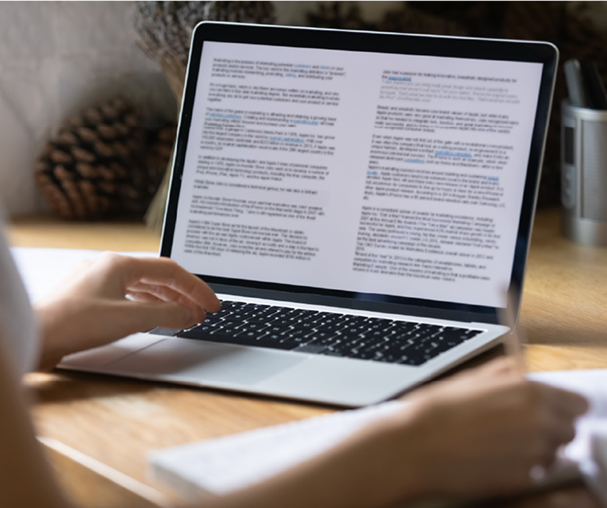
A manuscript that has been through two rounds of feedback needs something different from a first draft that nobody else has read. Ordering matters too: a proofread on an unedited manuscript will catch typos and leave every consistency problem intact. Below are the three levels available, and which one your book needs is determined by reading it.

Book Proofreading
The final check before your book goes to layout or upload. Typos, doubled words, missing punctuation, spacing problems, and formatting slips are caught at this stage. Suited to manuscripts already edited and needing one last clean pass. Skipping it means a stranger finds those errors instead, usually in a review.
Copy Editing
The most thorough option here, working through the manuscript sentence by sentence. Grammar, syntax, tense, and repetition are corrected, and consistency is held across the whole book: character names, dates, terminology, hyphenation, and style conventions. Most first-time manuscripts need this level. Voice is preserved throughout, with every change tracked and reversible.
Spell Check and Grammar Review
A focused technical pass for authors who have already revised carefully and want accuracy confirmed rather than a full edit. Covers spelling, grammar, and punctuation, including the mistakes software misses: homophones, apostrophes, and correctly spelled words used wrongly. Lighter in scope than copy editing, and priced to match.
Send Us Your Manuscript, and We Will Tell You What It Needs
Tell us about your manuscript and how much revision it has already been through. After reading it
- 100% Confidential and Author Focused
From Submitted Manuscript to a Book
Ready for Design
Editing works best as a conversation rather than a handover. The manuscript is read before anything is quoted, changes are made visibly rather than silently, and the author decides what stays.
1

Free Consultation
Tell us about your book and goals.
2

Manuscript Review
We review your manuscript or idea.
3

Proposal
You receive a clear plan and quote.
4

Writing / Editing
You receive a clear plan and quote.
5

Design
Cover and formatting are created profesionally.
6

Publishing
Your book is published in print and digital formats.
7

Marketing
Promotion helps your book reaching to readers
1
Free Consultation
We discuss your book, its genre, and how much revision it has already had.

2
Manuscript Review
Your full manuscript is read to assess its condition and what it needs.
3
Editing Assessment
You receive a written recommendation naming the level of editing required, with cost and timeline.
4
Editing Process
The manuscript is edited using tracked changes, so every correction stays visible and attributed.
5
Author Review
You accept or decline each change, and answer any queries raised during editing.
6
Final Refinement
Your decisions are applied and a last pass checks nothing was missed or introduced.
7
Publishing Preparation
A clean file is returned, formatted consistently and ready for design and layout.

Refined
Five Areas Every Manuscript
Is Reviewed Against
How much attention each area needs varies by manuscript. A carefully revised nonfiction draft may need little beyond accuracy checks, while a first novel often needs continuity work across the full length.
Grammar & Spelling
Punctuation, tense, agreement, and spelling corrected throughout, including the errors automated tools pass over: homophones, misplaced apostrophes, and correctly spelled words used in the wrong place.
Sentence Clarity
Sentences that obscure their own meaning are flagged and clarified. Ambiguity is queried rather than assumed, since guessing at intent is how meaning gets changed by accident.
Consistency Review
Character names, dates, timelines, capitalisation, hyphenation, and number style held stable across every chapter. One convention chosen and applied, rather than three appearing at different points.
Manuscript Flow
Transitions between sections and chapters checked so the reader is carried forward rather than dropped. Abrupt shifts are noted for your attention rather than rewritten.
Author Voice
Corrections address error, not style. Your rhythm, vocabulary, and register stay intact, and anything touching phrasing is raised as a suggestion you can decline.
A manuscript that has been through these five areas arrives at design clean, consistent, and ready to lay out.

Every Manuscript Comes in Needing
Something Slightly Different
Some stories arrive after two years of revision and need a final proofread. Others come in as a complete first draft, never read by anyone but the author. Both are legitimate starting points, and the books below reflect that range across fiction, nonfiction, and memoir.

The Orange Truth
Lane Pipes

Deep Context
Christopher Dewey
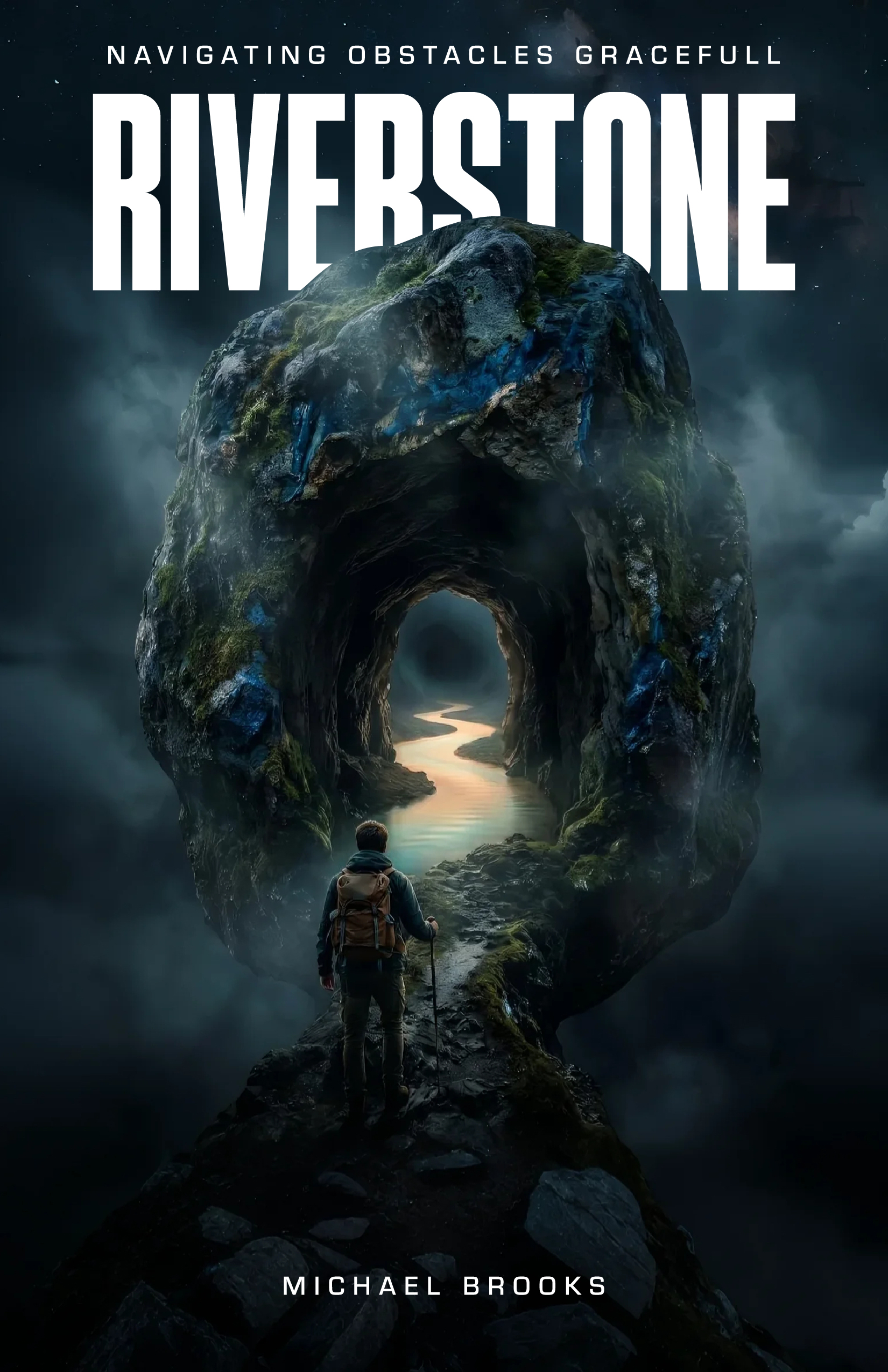
Riverstone
Michael Brods

Becoming Her
Erica Fratus

Love Sex Sins
Jasemine Larena

The Orange Truth
Lane Pipes
Full copy edit covering grammar, consistency, and continuity across the complete manuscript.

Deep
Context
Christopher Dewey
Final proofread before layout, following the author’s own revision rounds.

Riverstone
Michael Brods
Copy editing and proofreading ahead of print and eBook publication.

Becoming
Her
Erica Fratus
Grammar and spelling review on a carefully revised nonfiction manuscript.

Love Sex
Sins
Jasemine Larena
Copy edit focused on timeline consistency and dialogue punctuation throughout.

This Ain't
That
Estella M. Jhonson
Proofreading of formatted files before final print approval.
The full portfolio covers more genres and formats. Look for something close to your own book.
What the Editing Process Was Like, From
Authors Who Went Through It
In these videos, authors we have worked with describe how that went: what came back, how changes were handled, and whether the book still sounded like them.

Rick Ainsworth's
Author of American Dictator
Worked with our team on editing, cover design, and Amazon publishing setup.

Debrah Sharpe
author of Bobcat Territory
Came to us with a finished manuscript needing cover design and print formatting.

Rosaria Rizzolo
author of An Italian Girl’s Struggle
Guided through the full process, from manuscript review to print and eBook release.
Before trusting anyone with your manuscript, it helps to hear how the process went for someone else.
What Authors Ask Before Handing
Over a Manuscript
Editing raises more questions than any other stage of publishing, mostly because the terminology is inconsistent across the industry and the same word means different things at different companies. These answers explain what each service actually involves here, and what it costs you in control.
1. What are book editing services?
Book editing services are professional reviews of a manuscript before publication, correcting language errors and inconsistencies that the author can no longer see in their own work. Depending on the level, this covers grammar, punctuation, sentence construction, and continuity across the full book. Editing is distinct from design and publishing, and normally happens first, since later stages build on a finalised text.
2. Why do I need an editor before publishing?
Because self-editing has a hard ceiling. Familiarity with your own text means your brain supplies what the page is missing, so errors you have read past twenty times remain invisible to you and obvious to a stranger. Readers encounter your opening pages through sample previews before buying, and errors there affect both the purchase decision and the reviews that follow.
3. What is included in book proofreading?
Proofreading is the final error check, performed on text that has already been edited or carefully revised. It catches typos, doubled or missing words, punctuation errors, inconsistent spacing, and formatting problems introduced during layout. It does not restructure sentences or resolve consistency issues across chapters. A manuscript that has never been edited needs more than a proofread.
4. What is copy editing?
Copy editing is a thorough pass through the entire manuscript, correcting grammar, punctuation, syntax, tense, and repetition while holding consistency across the whole book. Character names, dates, timelines, terminology, hyphenation, and style conventions are standardised so the text follows one set of rules. This is the level most first-time manuscripts genuinely need, and it precedes proofreading rather than replacing it.
5. What is the difference between proofreading and editing?
Proofreading is a final surface check on near-final text. Editing is a deeper pass that addresses sentence construction, clarity, and consistency throughout. The practical distinction is timing and depth: editing happens on the manuscript, proofreading happens once editing is complete. Most books need both, in that order. Buying only a proofread on an unedited draft leaves the substantive problems in place.
6. How much does book editing cost?
Cost depends on manuscript length, its current condition, and which level of editing it requires. Two books of identical word count can need very different amounts of work, which is why a quote follows an actual read rather than a flat per-word rate. Liberty Book Publishings reviews the manuscript first and provides written costing before any commitment.
7. How long does editing a book take?
Length and complexity set the baseline, and the level of editing required affects it considerably. A copy edit on a long or heavily worked manuscript takes substantially longer than a proofread on a clean one. Your own turnaround on reviewing tracked changes also affects the schedule, since editing pauses until your decisions come back. An estimated timeline accompanies the written scope.
8. Can you edit fiction and nonfiction books?
Yes, including memoir. Each carries its own conventions: fiction needs dialogue punctuation, tense, and point of view held consistent, while nonfiction requires attention to citation format, terminology, and factual internal consistency. Memoir sits between the two, using narrative technique while making factual claims. Editing is handled according to the conventions of your genre rather than one universal standard.
9. Will editing change my writing style?
No. Corrections address error and inconsistency, not voice. Your vocabulary, sentence rhythm, and register stay intact. Anything that touches phrasing is raised as a suggestion with a comment explaining the reasoning, so you can decline it. All work is done in tracked changes, meaning every alteration is visible and individually reversible. Final creative decisions belong to the author.
10. Can you edit my manuscript before publishing?
Yes, and that is the usual order. Editing comes before design and formatting, because layout is built from finalised text and changing words afterwards means redoing the interior. Authors planning to publish through Liberty Book Publishings often start with editing and continue into design and publishing, though editing can also be purchased on its own.
11. Do I keep copyright ownership of my manuscript?
Yes. Authors retain 100% copyright ownership. Editing creates no claim, no shared credit, and no co-authorship, and Liberty Book Publishings holds no rights to your work at any stage. Editorial suggestions are proposals you accept or reject. The manuscript remains yours throughout, and you are free to take it elsewhere after editing.
12. Is my manuscript protected during editing?
Yes. A mutual NDA is issued before you send anything, covering the manuscript, drafts, and any material shared during the process. Access is limited to the people working on your book. Nothing is used as a sample, shown in a portfolio, or referenced publicly without your written permission. Files are handled privately throughout the project.
