
A great picture book can turn a rainy afternoon into an amazing adventure, make a child laugh out loud, or help them understand a feeling they could not explain before.
That magic usually starts with something very small, such as a funny idea, a curious character, or a simple question like, “What would happen if a little fox got lost in a busy city?”
Creating children’s picture books is more than putting words and drawings on a set of pages. The story, characters, colors, illustrations, and page layout all need to work together. Every part should give young readers a reason to turn the page.
The good part is that you do not need to create everything perfectly on your first try. A strong picture book develops step by step. You can begin with one idea, shape it into a story, and then use illustrations to make that story feel real.
What Makes a Great Children’s Picture Book?
A great picture book is simple without being boring. Young readers should be able to understand the main story, but they should also find something interesting in the pictures, characters, or emotions. A child may notice a tiny detail in an illustration that an adult completely misses.
The best books also understand their readers. A story for a three year old will usually use simpler language and shorter ideas than one written for a six or seven year old.
The subject matters too. A story about sharing, friendship, courage, or trying something new can help children connect the book to their own lives.
Words and pictures should also support each other. If the text says, “Milo opened the door,” the illustration does not always need to show exactly that.
Perhaps the picture can show what Milo sees on the other side. That gives children another part of the story to discover.
Start With a Strong Story Idea
Every picture book begins somewhere. Your idea might come from something you saw, something a child said, a childhood memory, or even an imaginary question.
You might wonder what would happen if a shy dinosaur had to perform on stage or if a little cloud refused to rain.
Start by asking what makes your idea interesting. A good concept often has a clear character, a problem, and a reason for readers to care. You do not need a complicated plot. In fact, simple ideas often work best for young children.
Think about the age of your readers before you begin writing. Consider what they enjoy, what they understand, and what they may be learning about the world. Then give your story one main focus. If your book tries to teach five lessons at once, the main message can get lost.
Build Memorable Characters
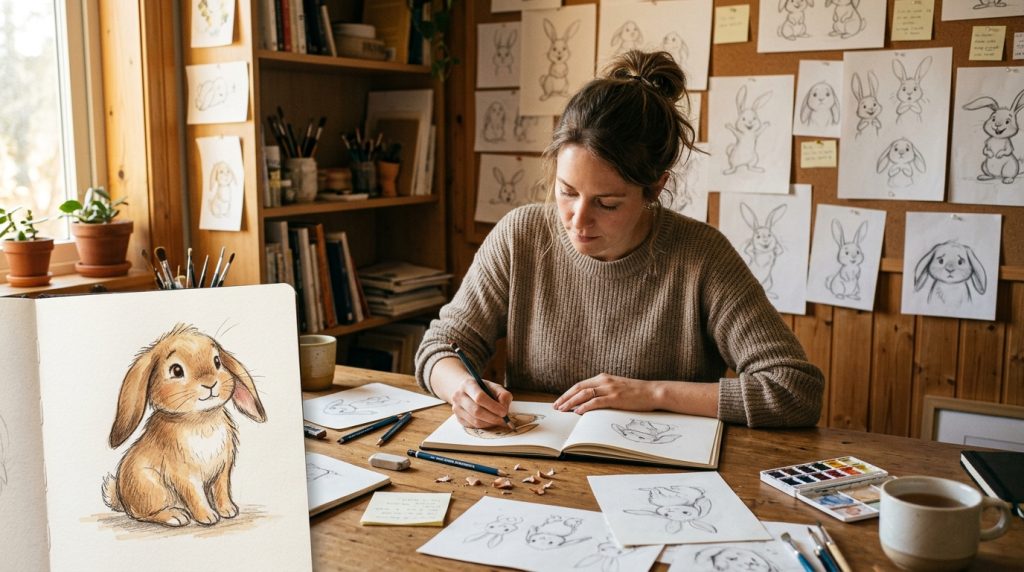
Children often remember characters long after they forget the details of a story. That is why your main character needs more than a cute appearance. Give them a personality, a desire, and a small challenge to overcome.
Imagine a rabbit who is afraid to leave the garden. The rabbit may look adorable, but the story becomes even more interesting when we understand why it wants to explore while feeling nervous at the same time. Children can recognize that conflict because many of them have felt nervous about trying something new.
Think about how the character moves, speaks, reacts, and feels. These details will later help the illustrator create a character who feels consistent from page to page. If the character is energetic, that energy should appear in both the writing and the artwork.
Turn the Idea into a Picture Book Story
Once you have your idea and characters, give the story a clear path. Most picture books have a beginning that introduces the character and situation, a middle where a problem develops, and an ending that provides a satisfying result.
Let’s suppose a young bear wants to bake a cake for its grandmother. The beginning introduces the story plan. In the middle, the bear makes mistakes like spills flour, and with that the bear discovers that baking is harder than he expected and at the end, the bear finds a way to finish the cake and learns a lesson that the effort matters more than perfection.
Keep the story focused on one main problem. Young readers do not need several complicated twists. They need a reason to care about what happens next.
At this stage, read your story aloud. If a sentence feels difficult to say, it may also be difficult for a child to follow. Reading aloud helps you notice awkward wording, repeated ideas, and places where the story moves too slowly. If you need professional support developing the manuscript, book writing services can help turn an idea into a structured book.
Plan the Pages with a Storyboard
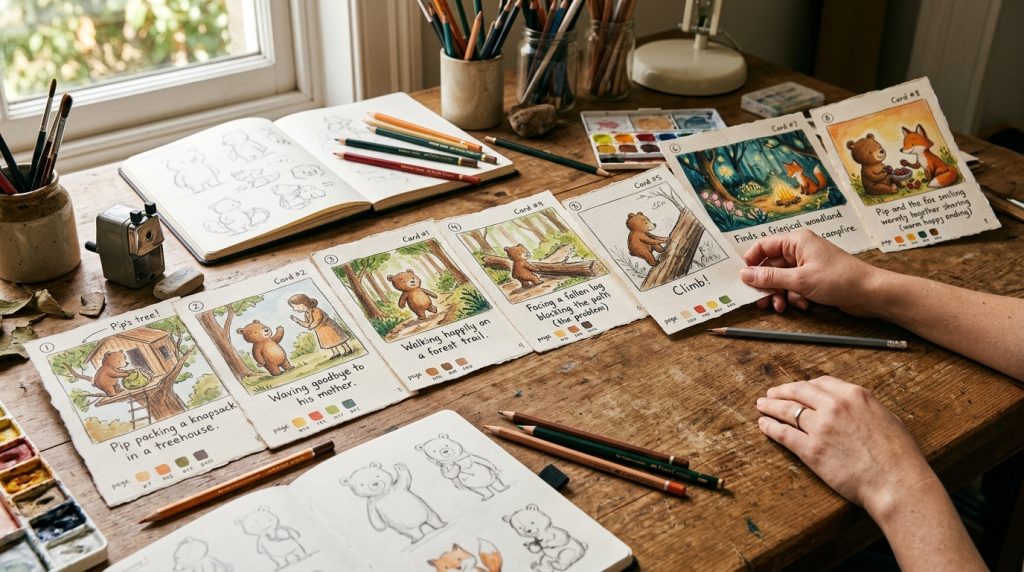
Before creating final illustrations you should plan how the story will look across the pages. A simple storyboard can help you decide which moments deserve a full illustration and where the text should appear.
You can sketch rough boxes on paper and write a short note inside each one. The drawings do not need to look good. They only need to show what happens on each page or spread.
A useful storyboard should help you check:
- Does every page move the story forward?
- Are there enough changes in setting or action?
- Do important moments have enough visual space?
- Is there a good balance between quiet and exciting scenes?
By following this step, you can save a lot of time. It is much easier to change a rough sketch than to completely redo a finished illustration.
Bringing the Story to Life with Illustrations
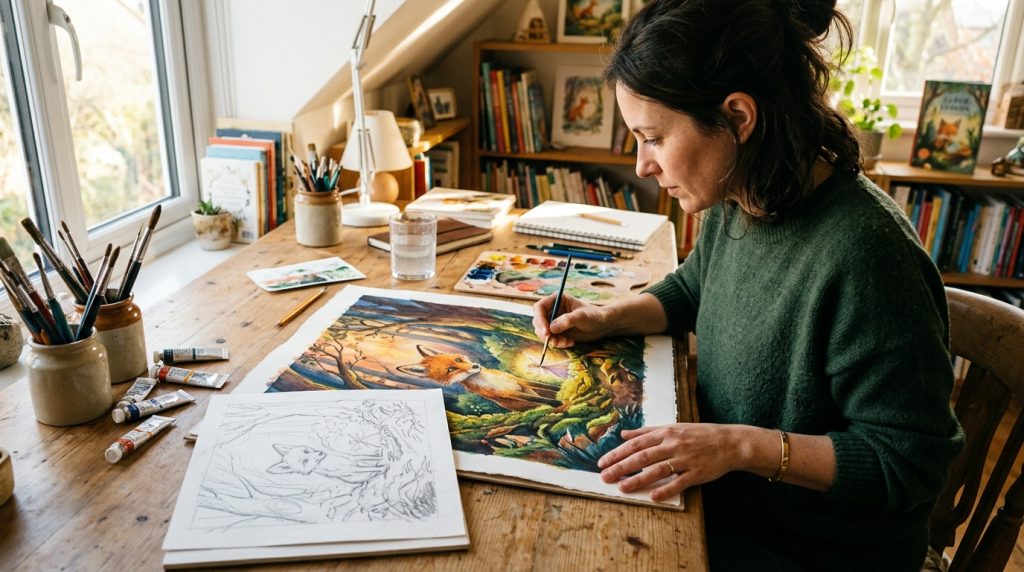
Illustrations give a picture book its visual personality. They can show a character’s mood, create humor, reveal parts of the story that the words never mention and introduce the overall setting.
Imagine a character saying, “I am not scared.” The illustration could show the character hiding behind a chair while trying to look brave. Suddenly, the scene becomes more meaningful, interesting and playful at the same time, because the picture tells us something the character will not admit.
Think about the expressions, backgrounds, colors, shapes, and small details. A bright and playful story might use lively colors and energetic shapes, while a quiet bedtime story takes benefit from softer visuals.
The goal is not to fill every empty space. Sometimes a simple illustration creates more impact than a crowded one. Give important moments room to breathe.
How Illustrations and Words Work Together
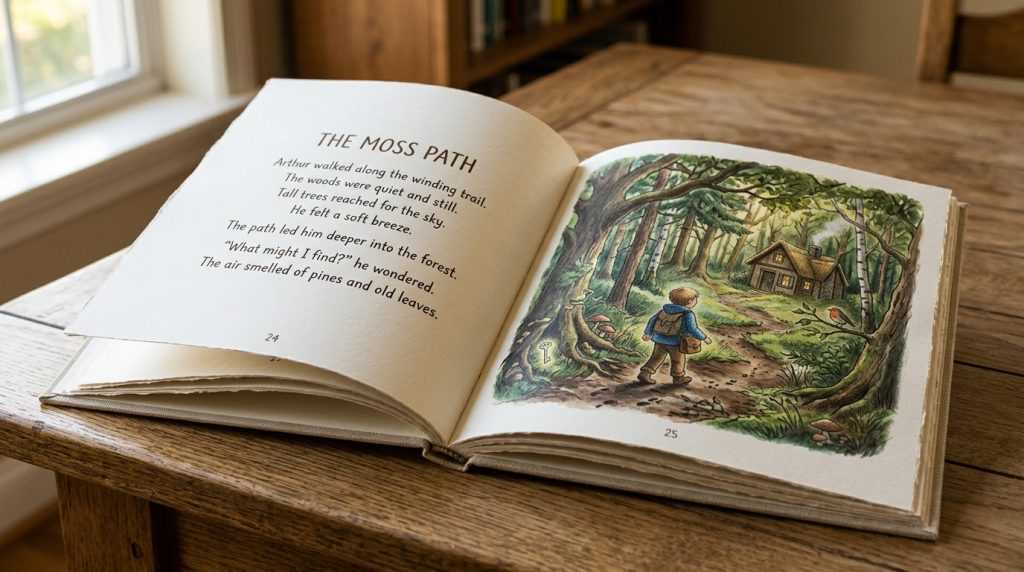
Words and illustrations should feel like two parts of the same conversation. Neither one should have to do all the work.
If the text already explains every detail shown in the picture, the illustration has little left to contribute. Instead, let the words tell one part of the story while the image adds another layer.
For example, the text might say that a child is walking through a forest. The illustration could show a tiny bird following the child, a strange footprint in the mud, or a hidden cottage between the trees. These details encourage children to look closely and ask questions.
This is one reason children’s picture books can remain enjoyable even after several readings. Children may discover something new in the illustrations each time they open the book.
Choosing the Right Illustration Style
There is no single illustration style that works for every picture book. The right choice depends on the story, characters, mood, and age of the intended readers.
A playful story may work well with bold shapes and expressive cartoon characters. A gentle bedtime story might suit soft textures and warm, calm artwork.
Watercolor can create a traditional, handmade feeling, while digital illustration can produce almost any look when used thoughtfully.
The important thing is consistency. If a character looks completely different on every page, the reader may become confused. The same character should have recognizable features, even when their expressions, poses, and clothing change.
It also helps to think beyond individual pictures. The illustrations should create a visual journey through the whole book. Colors, settings, character designs, and artistic details should feel connected from beginning to end.
Review, Refine, and Polish the Picture Book
Finishing the first draft does not mean the book is finished. Good picture books usually become stronger through revision. Read the story again after taking a short break. You may notice sections that feel unnecessary or moments that need more emotion.
Check whether the main characters goal is clear. Make sure the ending feels earned rather than rushed. Look for sentences that could be shorter or easier to understand.
Then review the artwork as a complete collection. Are the characters consistent? Do the illustrations match the story? Are important actions easy to understand? Is there enough variety between pages?
It can also help to show the book to a child, parent, teacher, or another trusted reader. Watch how they respond instead of immediately explaining your choices. If they become confused at a certain point, that may show you where the book needs improvement. Professional book editing services can also help refine the manuscript before it moves toward final production.
From First Sketch to Finished Picture Book
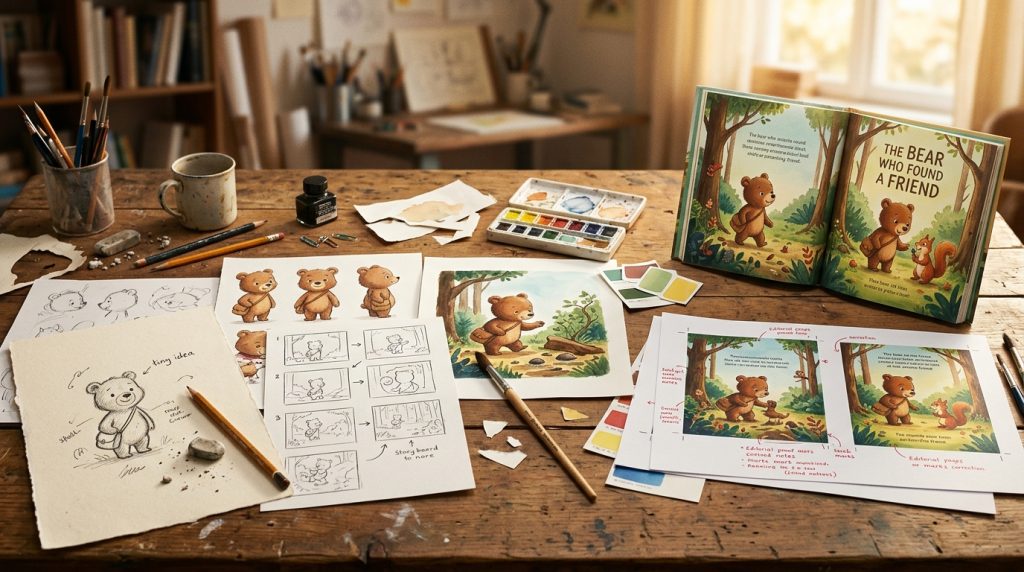
The journey from an early idea to a finished book can take many rounds of writing, sketching, editing, and arranging. That is normal. A rough sketch may become a detailed illustration, while an entire page of writing may eventually be reduced to one simple sentence.
Once the text and artwork are ready, they need to be combined into a final layout. Pay attention to the font size, spacing, margins, and where the words sit on each page. Make sure the young readers should be able to read the text comfortably without losing sight of the artwork.
Look through the completed book from beginning to end. Do not only check individual pages. Think about how the whole experience feels. Does the opening make you curious? Does the middle keep you interested? Does the ending leave you satisfied?
This final review is especially important because children’s picture books are experienced one page at a time. A strong individual illustration cannot fix a confusing sequence, just as a good story can lose its impact if the page design feels crowded.
Conclusion
Creating a picture book is a creative journey that starts with a small idea and grows through many careful decisions. You begin with a character or a concept, shape it into a focused story, plan the pages, and then use illustrations to make the world visible.
The strongest children’s picture books don’t simply tell children what happens. They invite them to imagine, notice, wonder, laugh, and feel through the story. The words guide the story, while the illustrations open the door to everything that cannot be said.
You do not need a huge idea to get started. A small character with a big feeling can be enough.
Begin with something you genuinely care about, keep the story focused, and let the pictures add their own voice. With patience and thoughtful revision, that first little idea can grow into a book that children want to read again and again.
Frequently Asked Questions
Start with a simple story idea that children can understand and enjoy. Choose a main character, give them a goal or problem, and think about how the story will end. Then create a rough outline before writing the full story.
A children’s picture book should include an engaging story, memorable characters, age-appropriate language, and illustrations that support the text. It should also have a clear beginning, middle, and ending, along with a satisfying conclusion.
Choose a theme that connects with children’s everyday experiences, emotions, or curiosity. Friendship, kindness, courage, sharing, family, and trying new things are common examples. Pick a theme you can explore naturally rather than forcing a lesson into the story.
Keep the plot focused on one main idea or problem. Use short, clear sentences and familiar words, while adding enough action and emotion to keep children interested. Reading the story aloud can also help you find sentences that feel too long or difficult.
Many traditional picture books are around 300 to 1,000 words, although the ideal length depends on the target age, story, and publisher. Books for very young children are often shorter, while books for older preschool and early elementary readers may have more text.
Effective illustrations make the story easier and more enjoyable to understand. They show emotions, actions, settings, and details that may not appear in the words. Strong illustrations should also remain visually consistent and give children interesting things to discover.
Usually, it helps to develop and refine the story before creating the final illustrations. However, rough sketches and storyboards can be created during the writing process to plan how the pages will work visually. In professional picture book projects, the text and artwork often develop together through several revisions.
Choose a style that matches the story’s mood, characters, and target age. A playful adventure might suit colorful cartoon artwork, while a gentle bedtime story could work well with softer illustrations. Most importantly, the chosen style should be consistent throughout the book.
The timeline can range from a few months to more than a year, depending on the complexity of the story, number of illustrations, revisions, and publishing process. Writing, editing, illustration, page design, and production can each require several rounds of work.
The basic process involves developing the story, editing the manuscript, creating or commissioning illustrations, designing the pages, proofreading the final book, and preparing it for publication. Authors can then choose traditional publishing or self-publishing, depending on their goals and resources. For authors who want professional assistance with the final publication process, a book publishing company can provide support through the necessary production and publishing stages.
Turn Your Picture Book Idea Into a Finished Story
Have a picture book idea but need help shaping it into a complete, engaging story? From developing the concept and refining the manuscript to creating illustrations and preparing the final layout, professional support can help bring your children’s picture books from a simple idea to a polished book ready for young readers.
